
All six members of the Reserve Bank of India's (RBI's) monetary policy committee (MPC) expressed caution over food inflation during the December review, while two external members warned about high real interest rates as headline inflation approaches its target of 4 per cent. The central bank continued to maintain the status quo on both the repo rate and the stance in the December monetary policy. India's retail inflation in November rose to 5.5 per cent - its fastest pace in three months - due to higher food prices.

With the Reserve Bank of India raising the repo rate, reverse repo rate and cash reserve ratio by 25 basis points in the annual monetary policy, fund managers expect ultra short-term and short-term funds to continue to do well. However, if making fresh investments, they advise a time horizon of at least one year.

Interest rate on fixed deposits between 7-179 days has been reduced to 7 per cent from 7.5 per cent, SBI said in a statement.

TMFs invest in a public index, so investors know beforehand which instruments the fund will invest in.

A day after its bigger rival ICICI Bank cut its lending rate, the third-largest private lender, Axis Bank, on Friday lowered its base rate by 0.10 per cent to 9.85 per cent, effective June 30.

RBI's previous monetary policy was announced on September 29.

Tactical investors should have an investment horizon of around six months to one year, long-term investors should stick around for 10 years or more.

Morgan Stanley expects RBI to cut rates sharply rather than "dribble down".

The government hopes the latest action will lead to banks also lowering the cost of borrowing for corporate and individual borrowers.

Only three of India's 45 commercial banks have cut base lending rates since the Reserve Bank of India's surprise easing this month, hurting the government's drive to lift business investment.

Global trends, macroeconomic data, and the outcome of the US Fed policy meeting are the major factors that will drive the movement in the domestic equity markets this week, analysts said. "In the upcoming data-centric week, the focus will be on crucial releases, including inflation data from India and the US. "Indian inflation is expected to rise, while US inflation will remain steady.

RBI has cut policy rate thrice during 2015.

Most borrowers may not be aware, but quite a few banks already offer external benchmark linked home loans to favoured borrowers, says Harsh Roongta.
.jpg)
RBI is scheduled to announce monetary policy on Tuesday.
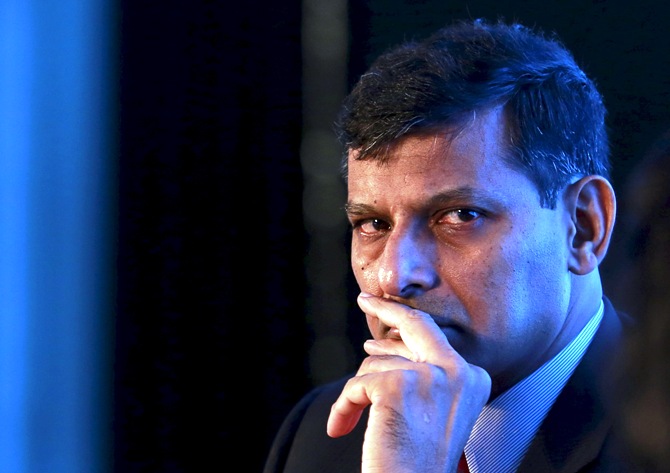
A Reuters poll showed only one out of 51 economists had expected a 50 basis points rate cut.

So for the time being, consumers need not worry about their EMIs on home loans, auto loans etc. going up. However, as April progresses the scenario could change.

Come January 31 and the RBI will announce its credit policy. To help you understand it, Get Ahead cuts through the RBI jargon.

Minutes of the MPC meeting show Das felt economy needs more monetary stimulus as inflation outlook remains uncertain.
The imported inflation component is also expected to ebb on lower oil prices and softer US dollar, it said.

Top Sensex gainers include Hero MotoCorp, Bajaj Auto, Asian Paints, IndusInd Bank, HUL, and Maruti, rallying up to 5.87 per cent. While, ICICI Bank, NTPC and ITC slipped up to 0.13 per cent.

'One way of doing this could be offering credit guarantee to the banks, say 10 per cent, for fresh loans given to micro, small and medium enterprises,' observes Tamal Bandyopadhyay.

RBI also retained its GDP growth forecast at 7.6 per cent
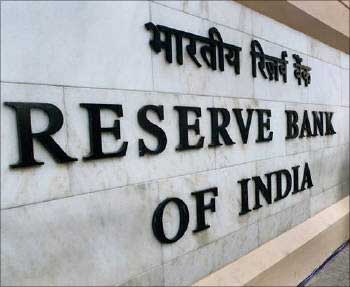
In policy review meet in June, RBI Governor Raghuram Rajan kept interest rates intact.

RBI rate cut is a welcome step for all citizens of India as everyone is looking for near-term boost in economy.

The RBI is expected to cut rates in next policy.
In the second policy review under Governor Shaktikanta Das, the six-member Monetary Policy Committee voted 4:2 in favour of the rate cut.

Equity benchmarks extended their decline for the fourth straight session on Wednesday, with the Sensex falling 214.85 points after the Reserve Bank raised the key interest rate by 50 basis points. Continuous foreign fund outflows and surging crude oil prices also weighed on markets. The 30-share BSE benchmark dropped 214.85 points or 0.39 per cent to settle at 54,892.49.
In a late Tuesday evening development, RBI raised the repo rate, or the rate at which it lends to banks, by 50 basis points to 8.50 per cent. The cash reserve ratio, or the proportion of deposits kept with the central bank, will be increased by 50 basis points to 8.75 per cent.

The Reserve Bank of India's rate-setting panel on Wednesday started discussions to firm up the next bi-monthly monetary policy amid expectations that it might retain status quo on interest rate but change its monetary policy stance amid rising inflation on account of geopolitical developments.
The RBI's assessment of the economy, presented as a prelude to the policy announcement, was relatively downbeat. Conceding the persistence of a hostile global environment and domestic weakness, the RBI expects GDP growth during 2009-10 to be 6 per cent. This is slightly higher than the 5.7 per cent that reflects the median of its external forecasters' survey.

Equity benchmarks ended modestly higher on Friday after the Reserve Bank raised the key interest rate in an effort to cool stubbornly high inflation and defend the rupee. Continuous foreign fund inflows into the capital markets and softening crude oil prices also helped the bourses regain momentum, traders said. The 30-share BSE Sensex ended 89.13 points or 0.15 per cent higher at 58,387.93 after facing volatility during the fag-end of trade. During the day, it climbed 350.39 points or 0.60 per cent to 58,649.19. The broader NSE Nifty went up by 15.50 points or 0.09 per cent to finish at 17,397.50.

Funds raised by banks through certificates of deposit in December clocked the highest in the financial year 2023-24 as liquidity remained tight in the system with the Reserve Bank of India (RBI) infusing Rs 2.01 trillion on Monday, the highest in the current financial year. The liquidity deficit in the banking system widened to more than Rs 2 trillion on Monday on the back of advance tax outflows, market participants said. Around Rs 4 trillion worth of outflows are expected because of advanced tax and goods and services tax (GST) payments in December.

'Your decisions should not be driven by your view on the market, but by your objectives, risk appetite, and time horizon.'

India is expected to contribute 15 per cent to the global growth in 2023, an International Monetary Fund (IMF) official said on Tuesday. "Both India and China are expected to contribute 50 per cent of the global growth in the upcoming year (2023). "However, the share of India's contribution to global growth is expected to be around 15 per cent," Krishna Srinivasan, director, Asia and Pacific Department (APD) at IMF said at a roundtable with reporters from south Asian countries.

Gaurav Garg, head of research at CapitalVia Global Research Limited will answer your stock market queries.

Most Asian stock markets steadied on Wednesday.

Following are the highlights of the RBI's first monetary policy statement of 2022-23 unveiled by Governor Shaktikanta Das: Policy repo rate unchanged at 4%; marginal standing facility rate & bank rate too remain unchanged at 4.25%. Monetary stance to be accommodative with focus on withdrawal of accommodation to keep inflation within target. GDP growth projection for FY'23 slashed to 7.2% from 7.8%; growth projections based on assumption of crude oil (Indian basket) price at $100 a barrel during FY'23. Inflation forecast hiked to 5.7% for FY'23 from 4.5%.

The share of low-cost money in total deposits continued to take a knock at the close of FY23 as banks engaged in intense competition by offering higher interest rates on term money to garner funds amid tight liquidity conditions. The share of current accounts and saving accounts (CASA) in total deposits declined by 2-4 per cent by end of March 2023 from March 2022 figure, according to BSE filings by private banks. The ease of movement of funds on digital platforms and the deployment of money by businesses from current accounts also played a role in dwindling the share of CASA money.

The chances of a rate cut in September have risen.

An expected withdrawal of FIIs from the market likely to weaken the rupee against the dollar.
